Feeling Our Way Through: Between Recognition and Distance | Claire Sivier
22nd May 2026This text was commissioned as part of Live Art Writers Network x Dias da Dança Festival 2026. For more information on the festival and the work done while in residency, alongside other commissions, visit this page.
Read text in Portuguese: Sentindo o Caminho: Entre o Reconhecimento e a Distância
Audio version, read by the author:
Episode One: Arriving through the body…and the past.
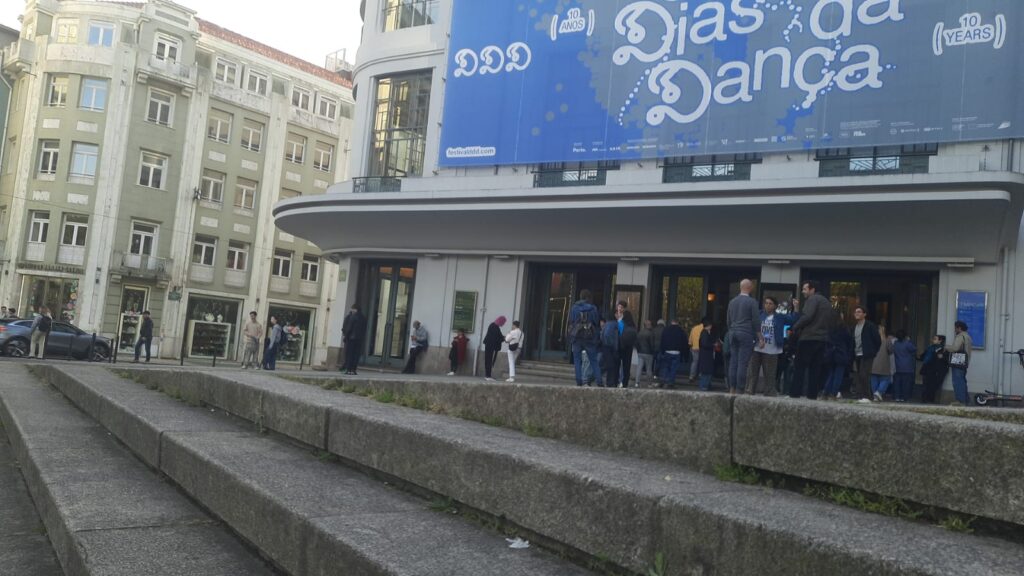
“Even before sitting down inside the theatre, I found myself thinking about the kinds of bodies these spaces had already imagined as belonging there. Mine wasn’t one of them”
When I was invited to take part in the Live Art Writers Network (LAWN) during DDD Festival in Porto, I felt genuinely grateful for the opportunity.
Ten days immersed in performances, conversations, and encounters across the city I’ve lived in for nearly eight years, a chance to move between theatres, public squares, and the streets that stitch them together. As someone working across research, socially engaged practice, and art, the invitation felt expansive. a chance to sit closely with performance and the questions surrounding it.
But if I’m honest, which I always try to be, I arrived anxious, carrying cynicism and pain shaped by years in festival environments. I worried what this experience would elicit.
That cynicism and anxiety are fair, though…
Before moving into research and artistic practice, I spent over 15 years in festival and cultural production and community engagement. I have experienced festivals from the other side: the exhaustion, invisible labour, and social hierarchies beneath the surface. And it’s not that there were no positive moments; there were plenty, but often I felt isolated as the only Black person and one of the few women. I felt the pressure to represent everyone. Over time, this shaped how I moved through these spaces and saw myself.
And how visible I allowed myself to be.
I realise now, at this stage of my life (we’re in our 40s now, folks), that my experience of festivals has also been inseparable from my experience of neurodiversity. The intensity of festival environments, noise, crowds, unpredictability, and prolonged social interaction can create both exhilaration and exhaustion at once.
Strangely enough, when I worked behind the scenes in these environments, there was often a greater sense of control. I understood the structures and learned how to move around them. Being an audience member asks something different of the body: continuous openness, receptivity and exposure to sensory and emotional intensity without the same sense of control or predictability.
Over time, I have learned to pay close attention to what my body is doing within these spaces: breath shortening, skin tightening, the urge to withdraw, moments of overwhelm, sitting alongside moments of deep connection and openness.
Because of this, I find myself thinking carefully about cultural participation, access and care beyond the usual institutional definitions.
What does it mean for a space to feel truly accessible, beyond institutional definitions? How do access and comfort intersect with gender, race, class, and language, for example?
Spectatorship is never neutral or singular.
Moving through a festival asks something of the body: the ability to travel across the city at night, sit for hours, absorb challenging work, and continually enter both familiar and unfamiliar spaces. I began to focus not only on performances but also on the infrastructures and forms of care that shape how audiences encounter work.
Who feels comfortable entering a space? Who hesitates at the door?
Who has been imagined as part of the audience before the performance has even begun?
And who knows whether the festival is even taking place? These are the questions that shaped my approach to the festival.
In this case, although the festival was held across venues in Porto, Vila Nova de Gaia, and Matosinhos, the backdrop remained rooted in the cultural scene of Porto, which serves as the festival’s main cultural centre. Over time, I have become aware of how cultural life in the city can feel geographically and socially concentrated within particular neighbourhoods, venues and institutions. The same atmospheres, aesthetics and audiences begin to recur across these spaces, while other parts of the city can feel disconnected from such encounters altogether. At first, that familiarity can feel comforting (kind of). And then another question begins to emerge:
Who else should be here? Would they even be welcome?
So while holding all of these thoughts, in addition to attending some performances alone, I invited several Black women living in Porto and the surrounding areas to join me for selected works throughout the festival. Partly, this was instinctive. I wanted to experience these spaces alongside women whose presence might also complicate assumptions around who festivals are for. I also wanted to create points of access. Openings. Invitations into spaces some had never entered before. Some had never attended the DDD Festival. Some had never stepped inside these kinds of cultural environments at all. That mattered to me.
I was also conscious that asking people to give their time, emotional openness and reflection required reciprocity. Whilst I know these women and they trusted me, it felt equitable to offer a financial contribution to everyone who participated in these conversations as recognition of their labour, care and presence. I did not want these encounters to reproduce the extractive dynamics that so often shape artistic and research practices.
Part of this process was rooted in co-producing knowledge. Rather than positioning myself as the sole observer or interpreter of the festival, these conversations became collaborative spaces of reflection in which meaning was shaped by sensation and our shared experience.
This process was never meant to represent “the Black Female Experience”, as though such a singular thing could exist and as my own experience has shown me. The women who joined me brought diverse histories, relationships to Porto, and experiences of race, migration, art, language, and cultural participation.
Some felt comfortable in these environments. Others did not.
Some were regular attendees of cultural events. Others were stepping into these spaces for the first time.
Many of the women I attended performances with did not arrive with a sense of the festival’s broader context or familiarity with how it moved across the three cities, as other festival goers might have.
What emerged were partial, subjective, situated reflections rather than the singular perspective so often projected onto us.
This tension felt important because although Black artists and performers remain underrepresented across many cultural institutions, Black bodies are often made visible on stage, within programming, and through institutional language around “diversity” and “representation.” Far less attention is given to audiences themselves: who feels able to enter these spaces beyond the artwork alone. This absence is never accidental or surprising, but structural, economic, colonial and well, perhaps you know the rest.
I set up a simple process: I shared a list of shows and let each woman choose the one that resonated most. After each performance, we shared informal conversations, sometimes immediately, sometimes through written reflections the next day. I asked questions like:
- What did you notice happening in your body during the performance? On your skin, in your breath, in your posture?
- What stayed with you emotionally? Have you been in spaces like this before? Did you feel comfortable here?
- What did the performance or the space open up for you: memories, tensions, questions, recognition?
There was never any pressure to “understand” the work correctly. I was interested in sensation as much as in interpretation, in what emerges when people feel able to speak honestly from their own embodied experience. Rather than seeking definitive readings, our conversations held the complexity that arises when art encounters bodies shaped by race, class, migration, memory, exhaustion, longing, and exclusion.
These conversations became as important as the performances themselves.
Before the festival began, I returned to Katherine McKittrick’s Demonic Grounds: Black Women and the Cartographies of Struggle, considering how racialised and gendered experiences of space shape movement through Porto. The festival unfolded not only in theatres and venues, but also in the routes between them, in those who felt comfortable crossing the city at night, and in how our bodies carried vigilance, exhaustion, or familiarity through different neighbourhoods.
As McKittrick writes, Black women’s geographies emerge through the negotiation of spaces shaped by racial and gendered power, a reality that persists in contemporary cultural spaces
Our conversations became a kind of counter-space and their own kind of archive.
Not a formal archive built through institutional language or official documentation, but something softer, unstable, embodied. A shared act of reflection and documenting with our bodies. Considering what stayed in the body after the lights came up. These reflections were never intended as definitive readings of the performances or as judgments placed onto the artists themselves. In many ways, the generosity and vulnerability of the works are precisely what opened these conversations in the first place. What interested me instead was the relationship between the work, the space surrounding it, and the bodies encountering it.
So what follows (and what you’re reading now) are what I think of as short episodes of reflection: fragments of encounter, conversation and response that emerged through moving between performances together. Some of the women wanted to be named, while others preferred anonymity indicated by their initial. To all of them, I am grateful.
Episode Two: Who feels invited?
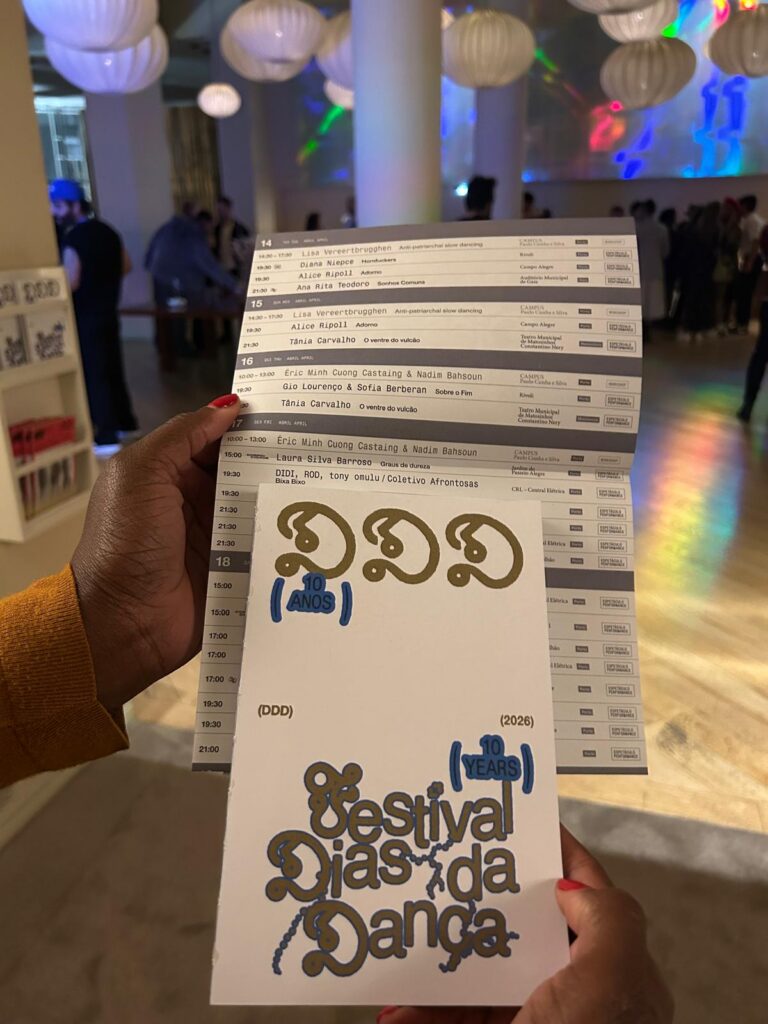
‘Outside Rivoli, cigarette smoke drifted through clusters of people speaking softly in Portuguese and English while we stood trying to find a place to sit and the language for what had just happened inside us’.
On the opening night of the festival, Encruzilhada by Renan Martins began the journey. I sat alongside Gessica, a Brazilian writer and activist who has lived in Porto for nearly 10 years. It became one of the first moments during the DDD Festival when many of the questions I had been carrying around about spectatorship, belonging, and cultural access set the tone for my and our experience of the festival.
When we met before the performance at Rivoli, Gessica admitted she had almost decided not to come. Contemporary dance, especially the idea of ballet, existed in her mind and imagination as something distant from her life: white, technical, intellectual, made for people already trained to understand its language. The title Balé da Cidade de São Paulo: Encruzilhada immediately caught her attention because of its connection to Afro-diasporic spiritual traditions: crossroads, ritual, and ancestral memory. That familiarity created enough curiosity for her to enter the space.
After the performance, something in her had shifted. She spoke quickly, almost breathlessly, trying to explain what had happened inside her body while watching two of the Black dancers in the piece move across the stage.
At one point, she told me:
“I didn’t know ballet could be like this.”
She spoke in particular about the impact of seeing Black women dance among the mass of dancers on stage. Watching them triggered recognition inside her own body, movements and rhythms that felt familiar rather than distant.
Later, she reflected:
“I move like this, too.”
Not technically. Not professionally. But instinctively. Socially. Ancestrally.
As the conversation continued, Gessica began describing how the choreography also reminded her of São Paulo itself, its density, chaos, crossings and relentless movement. Watching the dancers weave across the stage, she recognised something of the city she came from: overlapping rhythms, disorder somehow holding itself together, bodies constantly negotiating movement and survival through crowded space. For her, the performance became entangled with geo-social memory: the emotional and bodily memory of a city still living inside her long after migration.
I found myself thinking about how performance spaces often privilege intellectual interpretation over embodied recognition. Gessica understood the work through sensation and response, not technical language.
Watching Encruzilhada alongside her also opened something inside me. I felt a familiarity in the choreography too, something historical and embodied moving through the dancers’ gestures and relationships to one another.
At times, I felt almost electrified by what was happening on stage, wanting to respond more openly to what I felt in my body. And yet the social dynamics of the theatre, the stillness and restraint familiar to these spaces, remained. I was reminded how spectatorship itself is choreographed within institutional cultural spaces. Even while feeling deeply connected to the work, part of me remained restrained by the environment. Gessica too.
This tension lingered. I thought about the pressure on artists represented in established institutional spaces like theatres, while simultaneously wondering about the limits of those environments and what other possibilities might emerge elsewhere, and what audiences could engage with differently if spaces allowed for more varied participation and intimacy?
At the same time, Gessica kept returning to another familiar question:
‘Where were the other Black or racialised audiences?’
If this performance generated such powerful recognition for her, why did the audience still feel overwhelmingly white and culturally initiated? Together, we wondered whether the festival had genuinely attempted to reach racialised communities in Porto or had assumed accessibility rather than actively worked to build it.
I consider how often institutions assume that programming work by marginalised artists will naturally diversify audiences, without questioning the structures surrounding that encounter. What does it mean for these bodies to remain highly visible on stage while the gaze directed toward them remains overwhelmingly white and institutionally familiar? At times, these dynamics feel uncomfortably close to older colonial logics of display: marginalised bodies made visible, while the structures of looking remain unchanged.
Listening to her, I kept returning to the idea of invitation as infrastructure. Accessibility is not neutral. A free ticket does not automatically produce a sense of belonging.
Episode Three: Occupying the Room
“Standing beneath the high ceilings and security checks of Palácio da Bolsa, I became aware of how some spaces ask certain bodies to shrink before anything has even begun.”
By the time I arrived at Repertório N.1 by Davi Pontes and Wallace Ferreira at Palácio da Bolsa, I was already thinking about how institutions choreograph behaviour before performances even begin.
Who feels relaxed entering a building?
Who already knows how to move through security checks, queues and controlled entrances without hesitation?
The Palácio da Bolsa’s ornate, imposing architecture, saturated with histories of wealth and colonial power, demanded a particular behaviour from those moving through it.
I found myself thinking again about Sara Ahmed’s On Being Included: Racism and Diversity in Institutional Life, particularly her writing on institutional comfort: how some bodies move easily through spaces because those environments have already been shaped around them, while others arrive already alert, uncertain, or self-conscious.
When Mwana later reflected on arriving at the venue, she described feeling this tension immediately. Although she had visited the building before, the entrance process, queues, security checks, and controlled access still felt intimidating and unnecessary to her. Even at a free public event, the atmosphere still conveyed a sense of restriction and exclusivity.
Inside the performance itself, another tension emerged.
Mwana told me that at first the two Black performers’ nudity made her feel deeply uncomfortable. Watching them, she became aware of her own body under the imagined gaze of the room, as though she herself had become exposed.
That feeling stayed with me because it made me think about how racialised spectatorship often operates through hypervisibility. Sometimes the body enters a room already aware of itself as being watched. I considered how certain bodies become displayed within institutional spaces: visible, scrutinised and interpreted through particular kinds of gaze.
But gradually, she said, something shifted. She stopped seeing nakedness itself and instead began seeing bodies inhabiting space without shame.
The performers moved with such openness and ease that the nudity slowly dissolved into something else: intimacy, presence, freedom. She described becoming deeply affected by the way the performers occupied the room “without taboos, without secrecy.”
By the end of the performance, what remained with her emotionally was the feeling that she had witnessed:
“a ritual for healing the memories that inhabit that space.”
I consider this in relation to the architecture of space itself, about how buildings carry histories inside them, colonial histories and exclusions and whether performance can momentarily interrupt those memories through the presence of different bodies moving inside them.
Throughout her reflection, Mwana kept returning to the idea of occupation.
Not occupation in an abstract sense, but through small embodied gestures: sitting in the middle of the room, taking up space fully, occupying front seats without shrinking under the gaze of others. At one point, she told me:
“Let them be uncomfortable and deal with it.”
Navigating institutional spaces as a racialised person often means self-managing, shrinking, and calculating visibility. Her reflections suggested another possibility.
To remain visible. To occupy space fully.
To stop organising ourselves around the comfort of others.
What stayed with me afterwards was the sense that the performance had not only transformed her relationship to the bodies on stage, but also, however briefly, to the room itself.
Episode Four: Slow and Peripheral Intimacies
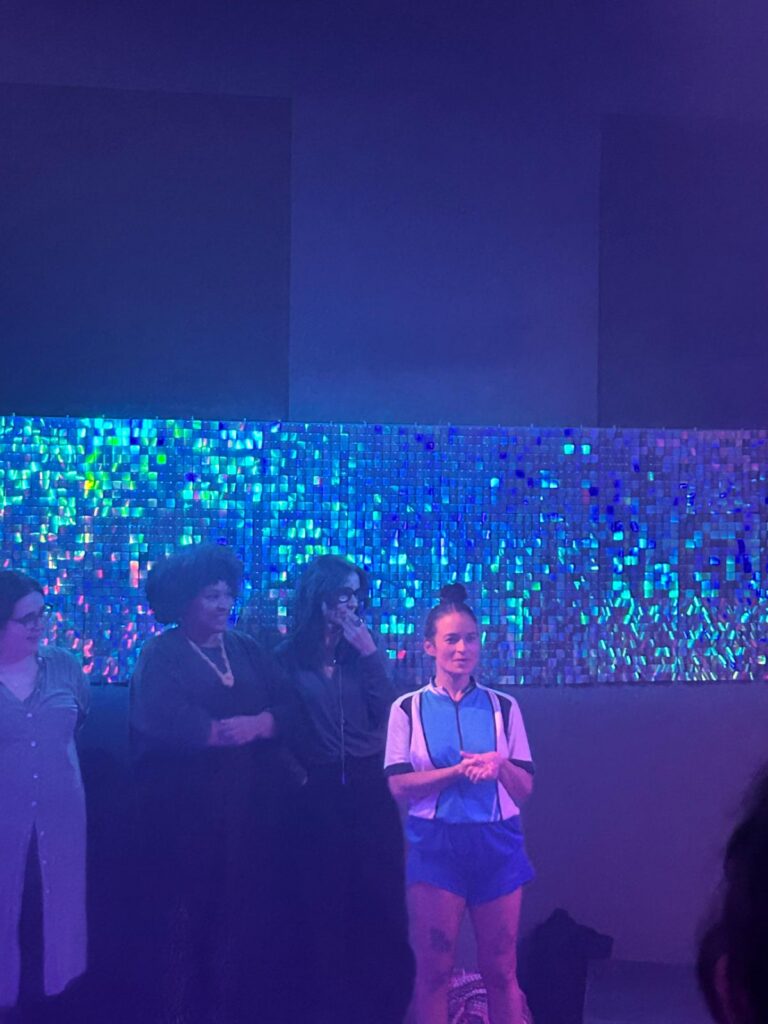
“Walking through Campanhã at night, our conversation drifted between the performances and larger questions about distance, belonging and who cultural spaces are really built for.”
While reflecting with Ana, our conversations had already turned toward Porto itself. Although Ana is Portuguese and spent a period in the city in 2017, she described Porto as emotionally isolating. Over time, she explained, belonging emerged through relationships rather than institutions: Black friendships, artistic networks, and informal communities built slowly.
That tension between visibility and exclusion stayed present throughout our conversations.
Together we travelled to watch two performances: Bixa Bixo by Afrontosas and Again Forever by Lisa Vereertbrugghen. Both performances took place at CRL – Central Elétrica in Campanhã, inside the former Freixo Thermoelectric Power Station, now a space for emerging and established artists in Porto.
The journey itself revealed how confusing crossings and disconnected routes made arrival feel unconsidered for those moving toward it. The venue felt physically and emotionally distant from the rest of the festival.
I found myself thinking about how partial our own understanding of these spaces also was. Although CRL – Central Elétrica may already hold important relationships within Campanhã and local artistic communities, that context was not necessarily visible to those arriving temporarily through the festival. I considered how the experience of distance can emerge not only through geography, but through unfamiliarity and the ways audiences are, or are not, oriented toward spaces across the city.
‘It felt like you arrived, and the place was just abandoned. So if the space is meant to be adapted and lived in, then I felt that it lacked that first embrace when we arrived.
Listening to Ana, I considered how geography itself can quietly reproduce hierarchy. Seeing Black queer artists in institutional spaces mattered, but the contradiction of being visible yet peripheral remained. The venue’s distance mirrored a wider logic: some are welcomed but never truly centred.
She told me it made her think about segregation. About tokenism.
I consider here how simplistic ideas of representation can be. Visibility alone does not undo structural exclusion. While Black artists occupying historically exclusive spaces is important, I keep asking: what do these institutions demand of those bodies once they arrive?
What does it mean to be invited in while remaining at the edge?
Inside the performances, we moved between intimacy and distance. With Bixa Bixo, knowing some performers made watching emotionally charged. The atmosphere felt joyful, communal, full of peers and friends. At one point, she thought:
“I want them to do well. Please don’t make mistakes.”
Together, we watched Black queer bodies move with softness, agency and pleasure, which felt unexpectedly emotional to witness. Their gestures seemed organised around intimacy, ritual and self-definition rather than survival or explanation.
As Ana spoke afterwards, she kept returning to the feeling that parts of the performance resonated with memories of Cape Verde. Certain gestures, movements and moments of collective celebration reminded her of Carnival: bodies dancing, singing, undressing, taking pleasure in being visible to one another. She described the performers not as people simply acting on stage, but as bodies that felt fully present within themselves, as though the performance extended outward from lived experience rather than performance alone.
Ana described the performance as moving through many different worlds at once. Some moments felt intimate and recognisable to her, while others positioned her clearly as a spectator, close enough to witness, but never fully inside. At one point, she reflected that the performance almost seemed to say:
“This is our world.”
The work didn’t ask to be universally understood or softened for everyone; it insisted on other worlds, other intimacies, and Black collective presence that didn’t need full translation for institutional audiences. It was for us.
Straight after watching Bixa Bixo, we walked across the yard to watch Again Forever, which opened something slower and unexpectedly intimate. Slowing down the world of hardcore techno, the performance invited a different relationship to the body: lingering rather than endurance, closeness rather than acceleration.
Through prolonged looks and slow suspended movement, I found myself emotionally and physically engaged in ways I had not anticipated. I had always assumed I disliked techno, but here I experienced it differently: slower, softer, something I could feel shifting inside me rather than resisting from a distance. Watching the performance, I became aware not only of the performers’ bodies, but of my own: of what was shifting emotionally inside me as the work progressed. The performance asked what becomes possible when we slow down and notice desire and vulnerability. As a neurodivergent person, the work’s slowness gave me space and regulation.
For Ana, the performances also opened moments of pleasure, tenderness and recognition. Scenes shaped through touch, slowness and collective movement felt deeply alive to her. Because Again Forever unfolded in the round, spectatorship itself became part of the choreography. We were not only watching the performers, but also becoming aware of ourselves watching and of being watched in return.
That dynamic changed the atmosphere of the room. Intimacy became entangled with exposure. At times, I found myself thinking about how spectatorship can reproduce something close to a voyeuristic gaze: the uneasy feeling of witnessing bodies through structures of looking historically shaped by whiteness, masculinity and control. Even within moments of softness and erotic tension, there remained the question of who was looking, and from where.
Vigilance remained present.
While watching scenes charged with erotic tension, Ana became suddenly aware of the male spectators around her and found herself wondering:
“What are they seeing?”
Even pleasure remained entangled with surveillance. At one point, Ana described the feeling of spectatorship:
“I’m here, but I’m also peeking.”
That stayed with me. It captured something I kept returning to throughout the festival: the unstable position of the spectator. Close, but never fully inside. Invited, but not entirely at ease.
Episode Five: Between Distance and Softening
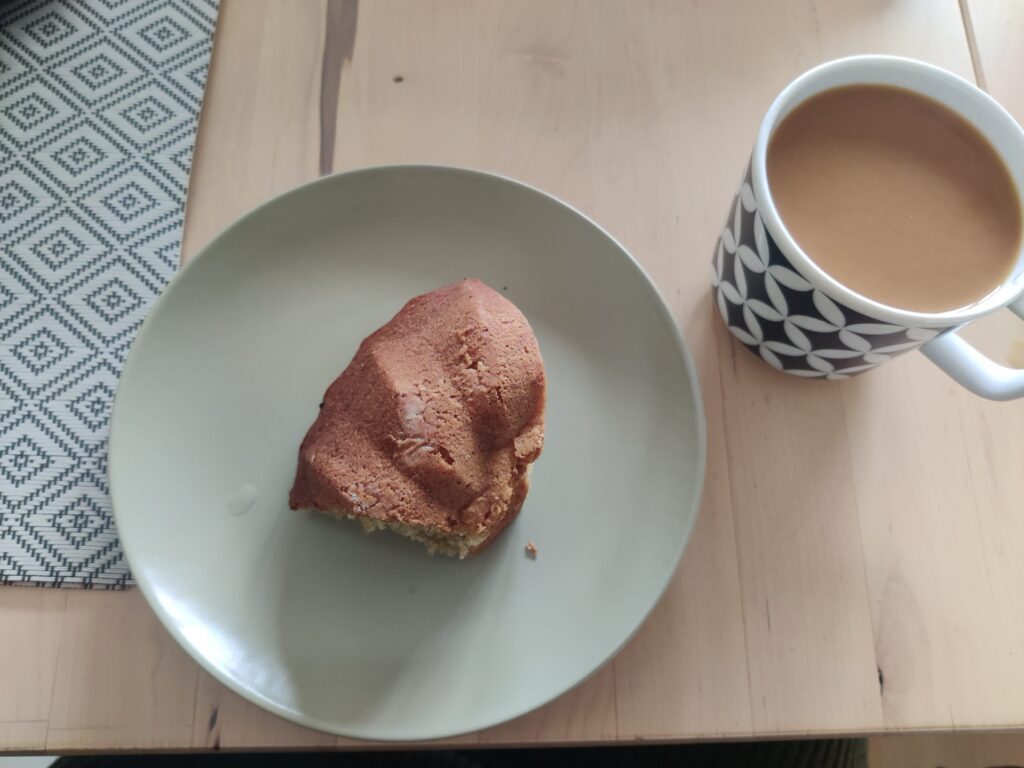
“By the time I reached E after rehearsal, the evening already carried a low hum of stress: tired bodies, late travel and the effort of making it across the city in time.”
Another conversation, after O Ventre do Vulcão by Tania Carvalho in Matosinhos, moved toward emotional disconnection rather than recognition. Before we had even arrived, E asked an important question:
“How are we getting there?”
The performance began at 21:30 and required travelling across the city late at night. Her question revealed how access begins long before entering a performance space. It exists in transport, distance, timing, cost and in whether people feel comfortable navigating unfamiliar cultural environments after dark. I found myself thinking about how often festivals assume a certain ease of movement: that audiences know how to arrive, can afford the journey, or feel safe moving across the city at night.
I kept wondering: if performingborders had not contributed financially toward transport, would we have gone at all?
By the time we arrived, the question of access had already shaped the experience.
Later, I found myself thinking about how perceptions of distance are shaped not only by geography, but by familiarity and economics. While I know the performances in Matosinhos are important to the wider ecology of the festival, it’s understandable that travelling there would carry different meanings for different people.
Following the performance, E spoke honestly about wanting to feel moved by it but remained distant from it throughout. Our conversation began in a Bolt on the journey back to my home and continued over tea later that evening. As we talked, her reflections slowly shifted away from the work itself and toward the atmosphere surrounding it: the audience, the whiteness of the room, the emotional restraint sitting inside the space.
At one point, almost accidentally, she admitted:
“I felt like I didn’t belong there.”
The sentence seemed to surprise her even as she said it.
Sometimes the body understands exclusion before language catches up.
She described the exhaustion of constantly monitoring herself inside predominantly white spaces and thinking about how she might be perceived. Adjusting herself and imagining judgment before it arrived. At one point, she reflected on how deeply this self-surveillance had settled into her thinking, describing how even while travelling to the performance she found herself imagining what others around her might think of her presence there.
Listening to her, I recognised that quiet psychological labour: certain spaces produce such self-consciousness that part of the body never fully arrives, even while watching the performance, another part remains occupied with monitoring, translating, and anticipating.
I remember her describing the room itself as emotionally cold and restrained. She compared it to other performances she had experienced within Brazilian communities, where audiences responded collectively and emotionally, where energy travelled visibly between bodies. Here, she felt distance instead.
“You don’t feel it,” she told me.
This stayed with me because it returned to the question of spectatorship and atmosphere. What kinds of emotional responses are encouraged inside institutional cultural spaces? Which forms of reaction feel acceptable or quietly suppressed?
At another point, she reflected that perhaps connection also depends on recognition: feeling represented somehow inside the work itself, or sensing that the performance is reaching toward you rather than past you.
Another conversation, after Sobre o Fim by Gio Lourenço & Sofia Berberan at Rivoli, took a different route. W described becoming fascinated by the relationship among plants, technology, and Black bodies in the performance. W has not attended the festival before, nor does she work or have a history of being in arts and cultural spaces. She admitted that these cultural spaces often feel like they speak another language. She had no expectations about what she was to experience. At first, she was confused, trying to make sense of everything happening on stage. As an engineer, she described her mind constantly searching for logic and explanation rather than simply allowing herself to experience the work emotionally.
But eventually something softened.
When the performance began using electromagnetic signals from the plants themselves to generate sound, her relationship to the work shifted completely. She started imagining plants communicating underground through their roots, like communities gossiping beneath the earth. The performance transported her toward images of dense forests where everything existed through relation, exchange and quiet forms of listening.
Afterwards, as we sat together eating tacos, she spoke about talking to her own plants at home, singing to them, believing they listened back.
“They feel my energy,” she told me.
At that stage in the festival, I was feeling emotionally fatigued, moving between performances almost on autopilot. Something about this conversation softened me. I loved the way it moved away from the pressure to decode the work intellectually and instead opened up questions of care, attention and connection.
It was another reminder that seeing art doesn’t always require clarity. Sometimes its role is to reopen intimacy, imagination, and attentiveness that connect works to everyday life.
Episode Six: The Ritual of Being Seen
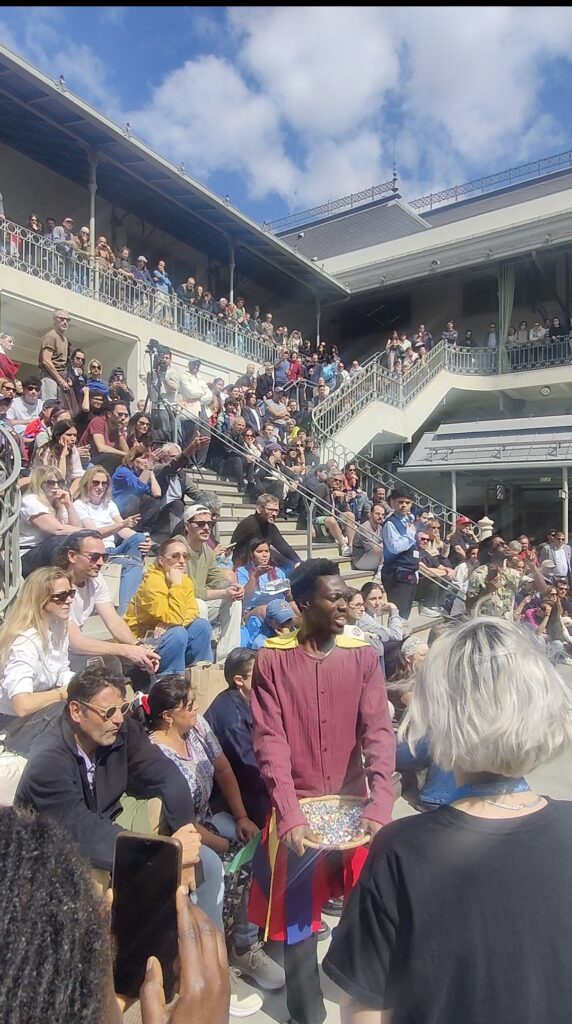
‘There was a strange tension between the intimacy of the work and the constant movement of the market surrounding it.
Um Corpo Chamado Templo, by Dinis Quilavei, was one of the moments during the festival when I felt most emotionally connected to a performance.
Partly, this came through watching alongside Atija and witnessing her own emotional response to the work, which opened something in me too. Her reactions became part of the experience itself. Atija, a Mozambican cultural worker and artist who has lived in Portugal for several years, described feeling overwhelmed when she heard Xangana, her mother tongue, sung publicly in Porto. At the end of the performance, she turned toward me and whispered:
“My heart is racing.”
Afterwards, she spoke about becoming unable to look away from the performers’ bodies: their skin, gestures, hair, rhythms and presence. Living in Portugal, she explained, means moving daily through overwhelmingly white environments: institutions, streets, workplaces, and authority figures. Inside the performance, something interrupted that daily landscape.
For once, her attention rested almost entirely on Black bodies. Bodies that reflected her to herself.
Bodies that reminded her of family ceremonies, ancestral practices, her grandmother speaking Xangana and forms of spirituality that migration and daily life in Portugal had slowly pushed into the background.
At one point, she told me, “It was as if I could not escape myself.”
Listening to Atija, I thought about what cultural isolation does to self-perception, and how overwhelming recognition can be when you unexpectedly see yourself reflected in language, movement, gesture, and ritual.
The performance seemed to reactivate memories that had been living quietly inside her body.
Watching inside Mercado do Bolhão created immediate tension, deep connection to the work, yet unease in the surrounding space.
We sat in tension- understanding the importance of performances existing beyond traditional theatre spaces, AND also wondering: how public was this public space, really?
Mercado do Bolhão is often framed as a public space, but, surrounded by tourism, consumption, and the circulation of visitors, the atmosphere felt strangely disconnected from the ritual intimacy unfolding inside the performance.
Our shared critique here came from care rather than dismissal. Our shared questions focused on the structures surrounding the work.
We both asked, “Who is this really for?”
I kept thinking about how often festivals describe public programming as inclusive simply because it takes place outside traditional theatre walls. But public space is never neutral either. Spaces already carry racialised, economic and social meanings long before performance enters them.
What stayed with me was the complexity of holding these truths at once:
that a performance can create profound recognition, healing and ancestral connection, while the structures surrounding it continue to reproduce exclusion.
Both things can be true at once.
Episode 7: After Leaving the Room

“The festival did not end when I left the room. It travelled home with me: in my tired body, in the conversations I kept replaying, and in the quiet thoughts that appeared once I was finally alone again.”
There has been a lot lingering with me since the festival ended. As I write this closing episode nearly two weeks after the last performance, what stays with me most is not a single shared conclusion, but the complexity of moving through these performances together. The same work could open recognition in one person while creating distance in another. Some moments left us emotionally exposed and joyful, while others left us frustrated, confused, or silent.
It is never simply about watching. The body arrives already carrying things: exhaustion, memory, migration, overstimulation, longing, grief, desire, curiosity. Sometimes a performance meets those things gently. Sometimes it ruptures them. And sometimes the tension between the audience and the work becomes its own quiet performance unfolding underneath everything else.
I experienced the festival differently from a “regular” attendee – 17 performances, more work in a short period than I can even reflect on here. Some performances remain unresolved, sitting more in the body than in language.
By the end, I felt both deeply moved and deeply depleted. Emotionally tired. Overstimulated. And, strangely, guilty for feeling that way.
Tired of seeing art? Tired of feeling so much?
I know how that sounds.
Even though I had been warned to pace myself before and during the festival (thank you, Xavi), something in me kept pushing forward. My neurodivergent, hyperfocused energy made it difficult to look away or slow down. I wanted to absorb everything, challenge my own cynicism and remain open to what might emerge.
Looking back now, I can see how deeply the festival moved through my nervous system as much as through my thinking.
Watching Reverberations by Wura Moraes in particular, I kept thinking about how bodies carry memory forward through gesture, repetition and presence. The performance, shaped through Wura’s relationship to the dance histories of her father and uncle, felt like witnessing an ongoing dialogue unfolding through movement. Since the festival ended, that idea has stayed with me.
Some performances do not end when you leave the room.
They continue echoing quietly through the body afterwards.
As days passed, I realised the most meaningful moments often happened outside performances: walking through the city at night, laughing until we cried on the grass, waiting for transport, sending late-night voice notes. Conversations drifted beyond the work, touching dating, joy, language, loneliness, family, spirituality and more. Performances often became the catalyst for other conversations to surface.
Looking back now, I return to the questions of centre and periphery that surfaced throughout the festival. Many conversations about access, distance and exclusion emerged as I moved between venues across Porto, Vila Nova de Gaia and Matosinhos. Hearing Tiziano Cruz speak about rethinking the relationship between “centre” and “periphery” deeply resonated with me as I considered how much our own perceptions of these spaces were shaped by familiarity, mobility and uneven relationships to the city itself.
Throughout the process, I found myself thinking more and more about the pressure placed on certain performances at festivals like these. Within institutions that remain deeply unequal, works by Black, queer, and racialised artists can begin to carry enormous symbolic weight. The performance becomes expected to represent, heal, open doors and prove something all at once.
Under these conditions, visibility becomes complicated. A work is no longer allowed to exist simply as a work; unfinished, evolving or contradictory.
And with that comes pressure: to succeed politically, emotionally and artistically at the same time. Pressure to carry representation “well.” Pressure not to stumble publicly inside spaces where opportunities still feel limited or conditional.
I kept thinking about how unfair this expectation can become, the idea that singular moments of visibility should somehow compensate for wider structural absences.
Perhaps this is why certain performances felt so emotionally charged: we were searching for recognition, possibility and evidence that other ways of existing inside these spaces might still be possible.
I keep thinking about how rare it can be to have spaces where people feel able to speak honestly about how culture actually feels in the body, particularly for those who do not already feel part of artistic, cultural or intellectual circles. To pause long enough to ask not whether something was simply “good” or “bad,” but whether it produced tension, recognition, discomfort or release. Whether it brought someone closer to themselves, further away, or differently connected to the spaces surrounding them.
Across these moments together, I witnessed people allowing themselves to take up space differently: to question openly, to feel uncertain, to speak from emotion rather than expertise.
What I carry away is less a set of conclusions and more a collection of traces, conversations, half-finished thoughts, and emotional residues. This text attempts to hold those fragments before they disappear.
I reckon that is enough. No resolution. Only evidence that we were there.
Moving through these spaces together.
Watching.
Questioning.
Feeling.
Taking up space.
_____________________________________________
Acknowledgements:
To the wonderful women who trusted me, accompanied me through these performances, and shared their reflections, laughter, honesty and care throughout this process: Atija, Ana, E, Gessica, Mwana and W. Thank you deeply. I love you all.
My gratitude also goes to everyone I shared this process with and the many conversations along the way: Hilda, Dori, Paulo, Pedro, Xavi and Anahi. Thank you for your generosity and presence throughout. Thank you, Rosie, for proofing and validating my neurospicy brain. And to the artists whose works moved through these conversations, bodies and reflections: thank you.
—
“Feeling Our Way Through” is commissioned by performingborders and Festival Dias da Dança – DDD 2026 for Live Art Writers Network.
Claire Sivier (she/her) is a Black-British social researcher, cultural producer and facilitator living in Porto. Over the last 15 years her work has been developed with artists, young people and those from marginalized communities, as well as delivering a range of festivals and cultural programmes. In 2020 Claire completed a masters degree in Art & Design for the Public Space at Belas Artes Faculty, Porto where she developed a walking art methodology exploring the lived experiences of black female diasporic artists in Porto. She has since founded Caminhada de Mulheres Negras (2021) as a space for black women and no-binary people to connect and walk in nature. Claire is the co-director and co-founder of There is an Alternative, an arts-based research social enterprise. As a walking artist she is interested in the intersections of the black queer experience, ecology, rituals, and unlearning. She is also a member of the InterStruct Collective; a network of researchers and artists working across socially engaged projects and decolonial practice based in Portugal and across Europe.
References:
Ahmed, Sara. On Being Included: Racism and Diversity in Institutional Life. Durham: Duke University Press, 2012.
Dimitrakaki, Angela, and Lara Perry, eds. Politics in a Glass Case: Feminism, Exhibition Cultures and Curatorial Transgressions. Liverpool: Liverpool University Press, 2013.
McKittrick, Katherine. Demonic Grounds: Black Women and the Cartographies of Struggle. Minneapolis: University of Minnesota Press, 2006.