Burong Zeng | November 2025
16th November 2025November. London. I enter the doors of Hoxton Hall to be embraced by a feast of zines, performances, screenings, food, artworks, live podcasts, workshops. Alternative Roots is a nine-hour space curated by Ming Strike – with the support of Kakilang – which centres East and Southeast Asian artists’ cross-border, cross-language, and cross-genre practices.
The warmth and excitement of being here is heightened by meeting so many familiar faces and, among them, one of the oldest collaborators of performingborders: Burong Zeng.
On this chilly Saturday, Burong has invited us all to gather for the premiere of the artist film Unbound Zine: Xiaomei Going Overseas which the press release describes as “a surreal and kitschy drag performance mixed with lip-sync style interviews based upon stories of East and Southeast Asian self-publishing underground heroes.” What not to love about it already?
Mapping the learning and interconnectedness of the participants of a two-year project across the UK and China, the artist film balances a humorous yet deeply political approach to narrate how zine and self-publishing are becoming an increasingly expansive way in which artists and thinkers are sharing their work and thoughts in order to find spaces of free expression and solidarity.
We follow the journey of Xiaomei, a fictional character who embodies the comments and voices of the project’s many participants, to bring us into the alternative realities created when publishing sits outside the market-led International Standard Book Number (ISBN) taxonomy.
Through a playful performative approach and stunning visual narrative, “Unbound Zine” queers the notion of zine-making and invites us to think on how this form transcends paper to merge with practices such as drawing on skin, use of textiles, performativity, as a way of creating knowledge/s which leave ephemeral traces, can exist in an economy of underground circulation, and thrive outside the realm of academia, the publishing market, and control-oriented institutional spaces.
Beyond the artist film itself, the project has generated multiple bilingual public events and workshops as well as commissioning new zines and artist books from four East and Southeast Asian queer artists that sit alongside Xiaomei’s on-screen adventures. These include Care Zine from the Beijing workshops, The Neofolk Manifesto and reprinted bilingual versions of three Smart Zine by Funa Ye, We Walk the Path by Sickgirl, Birdeathday by Finch, and 00 Zhang’s artist book – some of which feature in the collective dialogue captured in the banner image of this interview. Looking ahead, Burong will host lecture performances and zine-making workshops, allowing Unbound Zine to grow as a layered project that amplifies the visibility of Asian queer diasporas’ zine culture. This multidisciplinary approach sits at the heart of her work: producing, curating, and researching across boundaries, prioritising community engagement, and recognising zine culture as the collective, relational form it has always been – one that thrives through networked voices and shared labour.
Sustaining this multidisciplinary practice amid shrinking arts funding, hostile migration policies, and soaring costs requires not just skill but determined care, a refusal to let these vital networks dissolve when the landscape turns hostile. We at performingborders are curious to know more about how Burong has been working on Xiaomei’s epic journey across nations, boat-houses and courtrooms, and how Burong’s practice has developed into that of a UK-wide and international creative producer who focuses on growing an accessible, multilingual, and transnational network of artists and queer-crip communities.
performingborders: As a creative producer you have worked on various national and international projects in the past year where you have made sure communicating across languages and supporting zine cultures was the very centre as your knowledge-sharing approach is targeted particularly to those practitioners and participants unable to access traditional academic or formal publishing venues. Would you mind telling us more about your specific work around queer zine-making from the Chinese Diaspora?
Burong Zeng: When I was in Beijing in 2023, carrying out an R&D art project on invisible disabilities, I was keen to speak with local creative disabled practitioners and to see, without state funds, how they explore accessibility for both audiences and disabled practitioners. I planned to use my knowledge as a creative producer to help them write funding bids and bridge collaboration between China and the UK. Before 2020, I was a self-producing live artist and always found the lack of funding frustrating and significantly limiting the scale of my work. After finishing the PhD in 2022, I decided to shift my focus to producing nitty-gritty underground projects for other queer-crip artists like myself, but on a transnational level.
The first queer zine project I participated in was with ADHD Hub, which started in late 2022 in Wuhan as a grassroots hub to share ADHD experiences through creative outputs, many of which are also queer. I found it fascinating to explore invisible disabilities such as ADHD and Autism through the intersectional lens of “neuroqueer.” The event I went to happened to be a zine-making workshop with neuroqueer folks in a feminist-queer friendly venue in East Beijing, which I returned to many times. I never considered myself a crafty person, but getting into the flow of spending hours cutting paper and making zines collectively was such a unique experience. From there, I also went to abC Art Book Fair in Beijing, where I dug into the small section of self-publishing zines, which looked like pamphlets in all shapes. Some of them were hand-written with limited editions, with wear and tear, all fitting into my ever-lasting interest in ephemerality in the digital age, just like live art or fragile zines.

Through my R&D work in 2023, I matched Lu Williams, the founder of Grrrl Zine Fair in Southend-on-Sea, who had participated in the abC book fair already, with Chinese visual artist Funa Ye to put together a successful application for British Council Connection Through Culture 2024. With the funding, I co-designed and produced a week-long trip for Lu to come to China to host zine-making workshops at independent arts venues and have conversations with Funa and other zine-making enthusiasts. Besides securing the funding, I wore multiple hats during the project: producer handling much of the logistics on site, translator for the events and video documentations, as well as an access support worker. For this transnational queer-disabled-led project to happen, I believe being a producer is not enough. Having a curatorial mind for long-term planning, the capacity to fundraise and manage the project timeline, and speaking English and Chinese as a native speaker are essential. I only became aware of how much work it involved and how rare this kind of collaboration occurs in reality after finishing the trip.
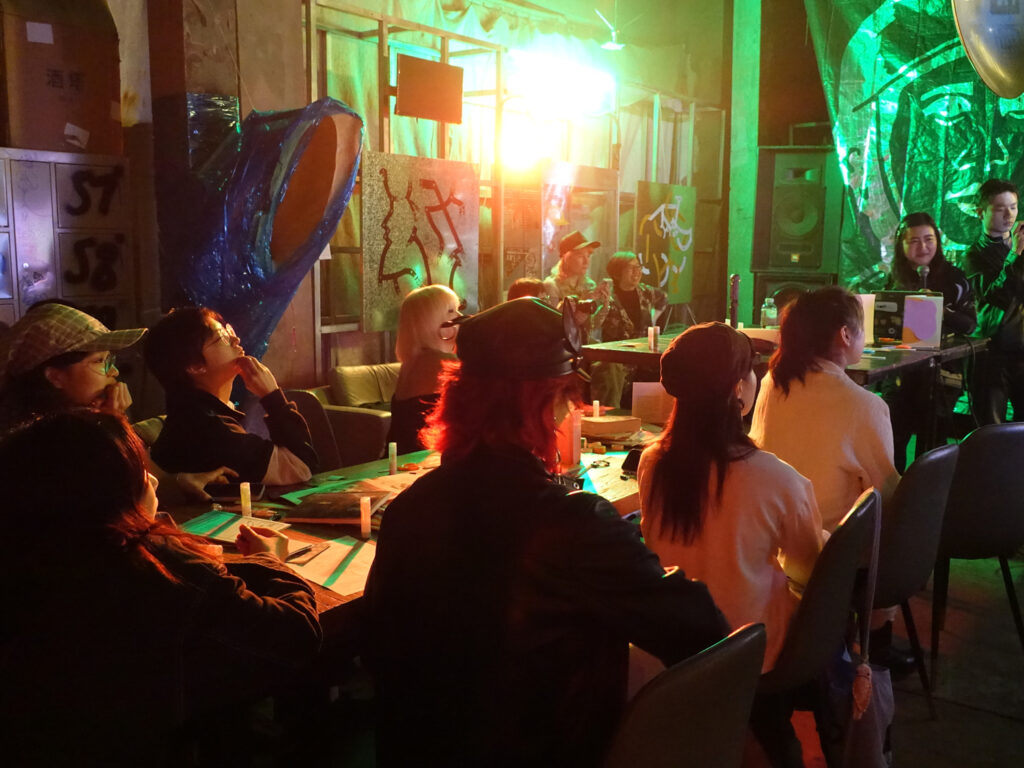
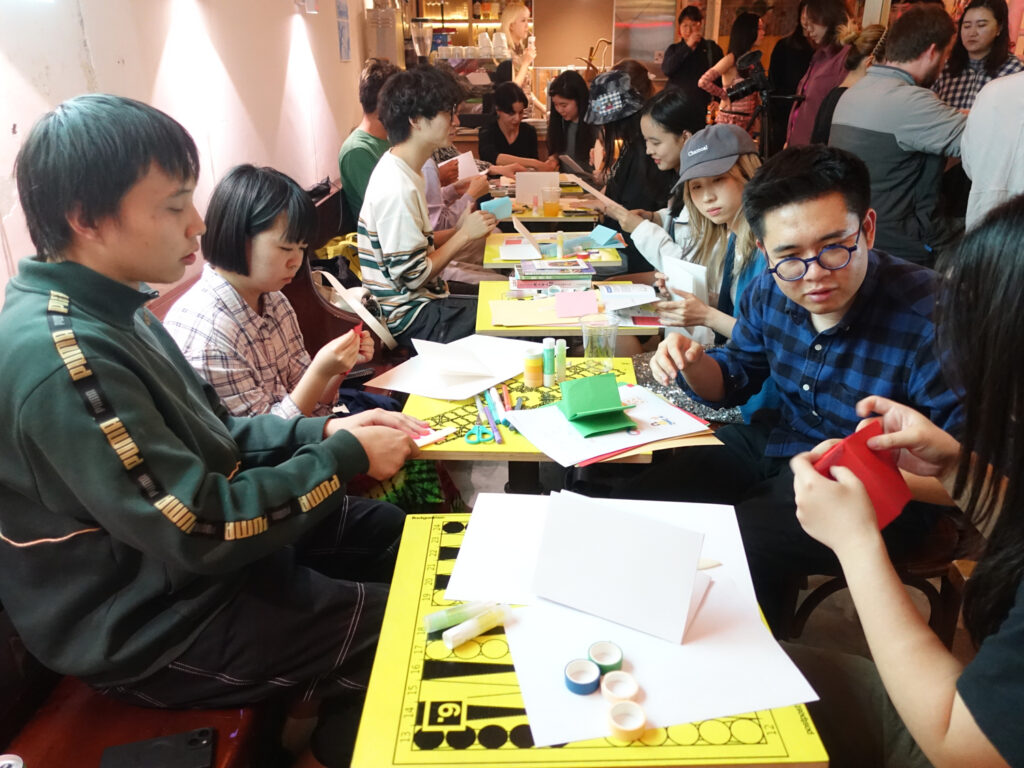
As a creative producer who also led this art project, I had a vision for it to grow into different formats over 15 months. Building on the British Council’s success, I applied for a National Lottery Project grant, hoping our small project would have longevity. Although making zines and translating them are meaningful, I wanted to produce a full package of ‘zine culture’, something that has yet to happen, instead of zine-making only in its material form. For the outcome, I co-created and produced this project, Queer and Feminist Zine Spirits Across Borders, with multiple bilingual outcomes. It includes: a 30-minute artist film on East and Southeast Asian zine culture titled Unbound Zine: Xiaomei Going Overseas, commissioned and launched four new bilingual commissions, and led a tour of public events with London Culture Salon (Oct 5th), Hoxton Hall (Nov 8th), Komedia (Nov 15th), an upcoming on at Live Art Development Agency (LADA) (Dec 13th: Workshop & Performance+Screening+Q&A) and more venues to be confirmed.
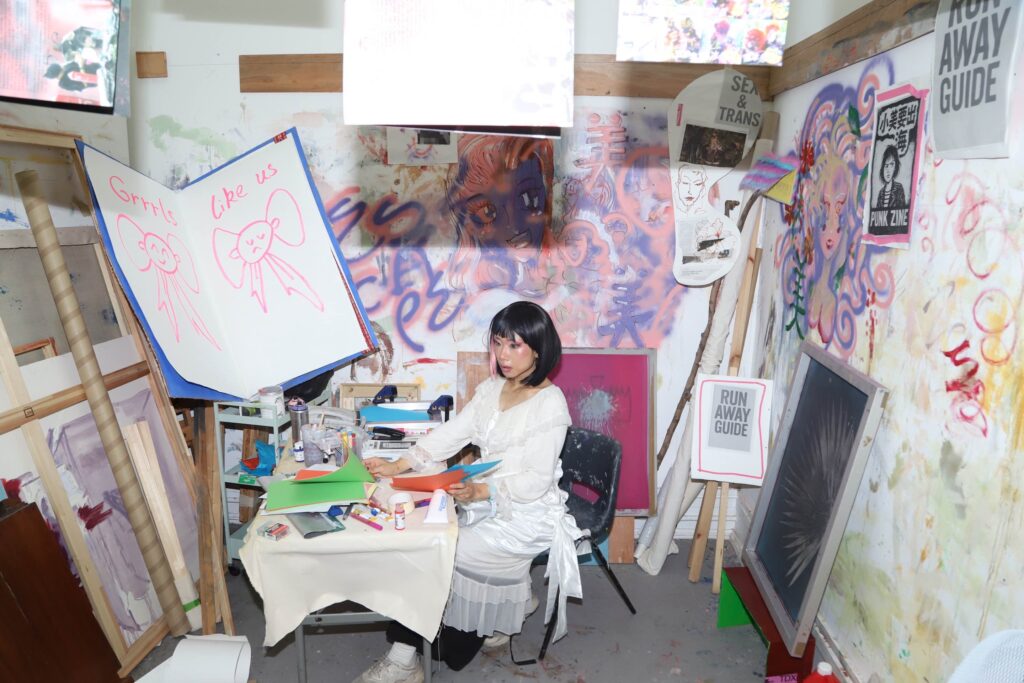
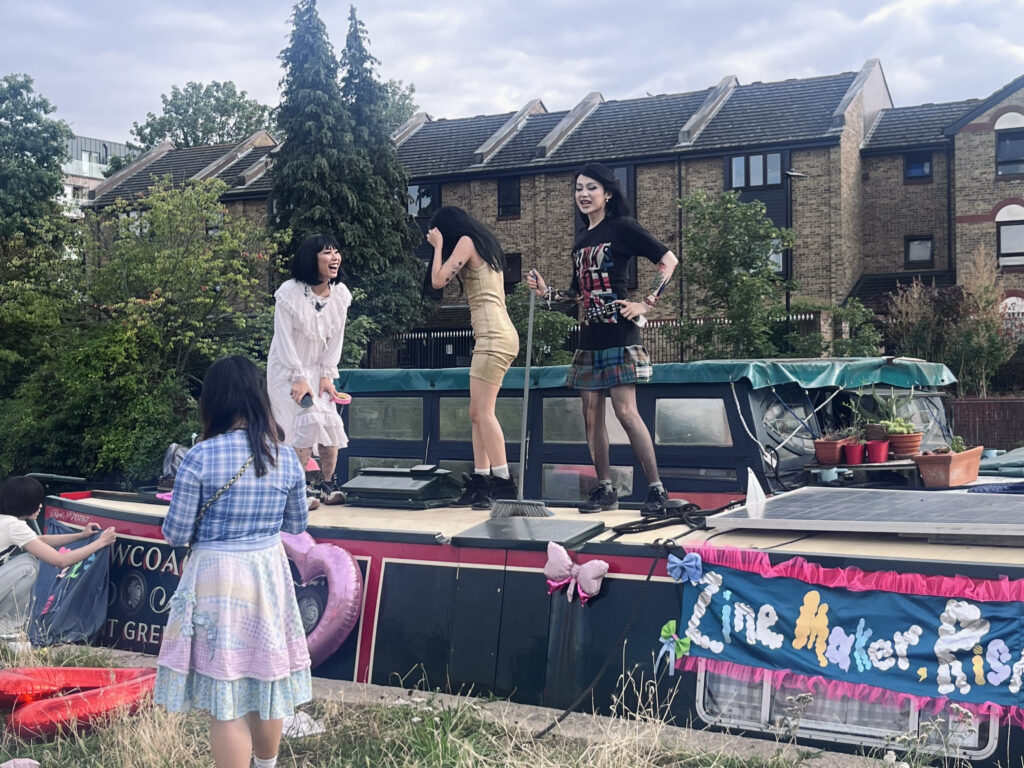
The project, Queer and Feminist Zine Spirits Across Borders, marks several important firsts for the UK-China cultural connections. It’s the first time for a grassroots arts project to bring Chinese and English queer-crip creative partners together; the first time for such an indie-project for the community of Chinese queer diasporas to receive support from high-profile partners like British Council, Unlimited, Hoxton Hall, Live Art Development Agency and Kakilang; and the first time partnering with organisations outside of London, such as Komedia in Brighton, to reach new audiences and develop new connections. Most of our events are made bilingual and free of charge to increase accessibility of artworks across the dual cultures that I consider to be mine.
performingborders: Since receiving a 2023 Award by Unlimited, you have been working with the organisation and in your own projects advocating for accessibility within the art sector. From your lived and professional experience, what are the key approaches you’ve found essential for building spaces that embody disability justice principles?
Burong Zeng: This inaugural China-UK queer zine-making project has been a centre of my independent producing practice over the last two years, going through many phases and continuing to develop multiple bilingual outputs in various formats. I would also like to highlight that I always include an R&D phase in each project and then embed the knowledge coming from R&D to develop an arts project as a creative producer and artist. For instance, my 2023 Unlimited project, Life Lies in (Non)Movement, was an R&D project on the embodiment of invisible disabilities. My main collaborator, the legendary Beijing-based performance artist Wen Liao, and I co-produced the events and performed together. The project is about the lived experience of disabled and chronically ill people after the pandemic as a counter-argument to the popular Chinese saying, “life lies in movement.” It challenges health supremacy and ableist assumptions about productivity and mobility. In the project with eight core participants with different access needs, we gave them a wide range of freedom to construct their own stories and perform on stage at the Chengdu Contemporary Image Museum.
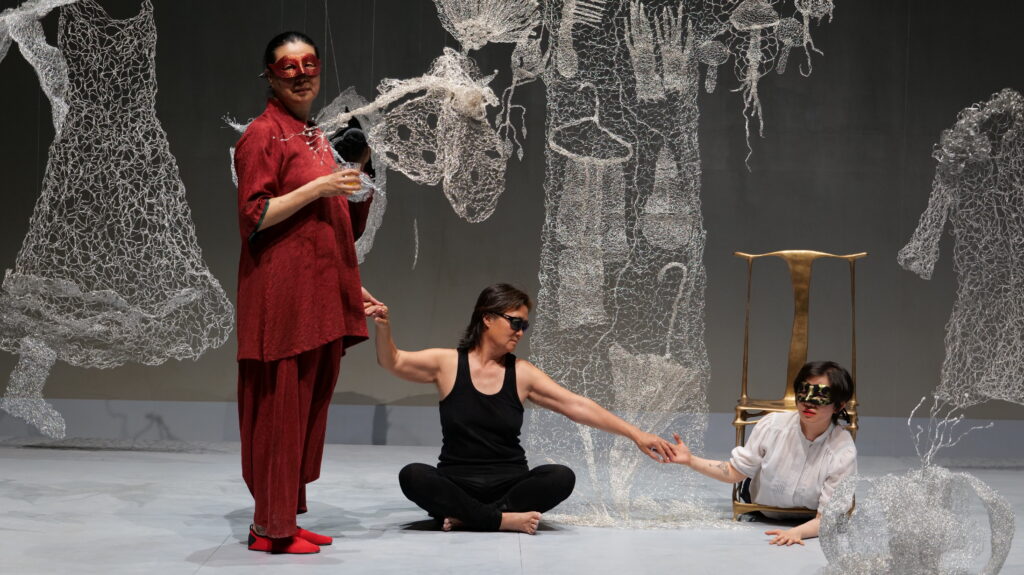

Funding remains essential to continue producing work I am passionate about. As an independent producer working in the combined arts, my work always starts with me researching or following a project for long enough before writing applications and securing funding to pay people fairly. I served as project observer for Er Gao Dance Production Group (EGDP)’s new production, Hide and Seek, which is a participatory dance performance created collaboratively with visually impaired partner Zeyu, who works in an NGO and also as a blind masseur. The premiere was at Tai Kwun, the cultural heart of Hong Kong, in March 2025. I stayed ten days there and wrote an in-depth review titled “Care Ethics and Resilience in Post-Pandemic Performance by Er Gao Dance” from a creative producer’s perspective, focusing on accessibility and inclusion of the work for the HK local audience. For me, reviewing means expressing my belief in the social value of the work, and I mainly produce work I believe in.
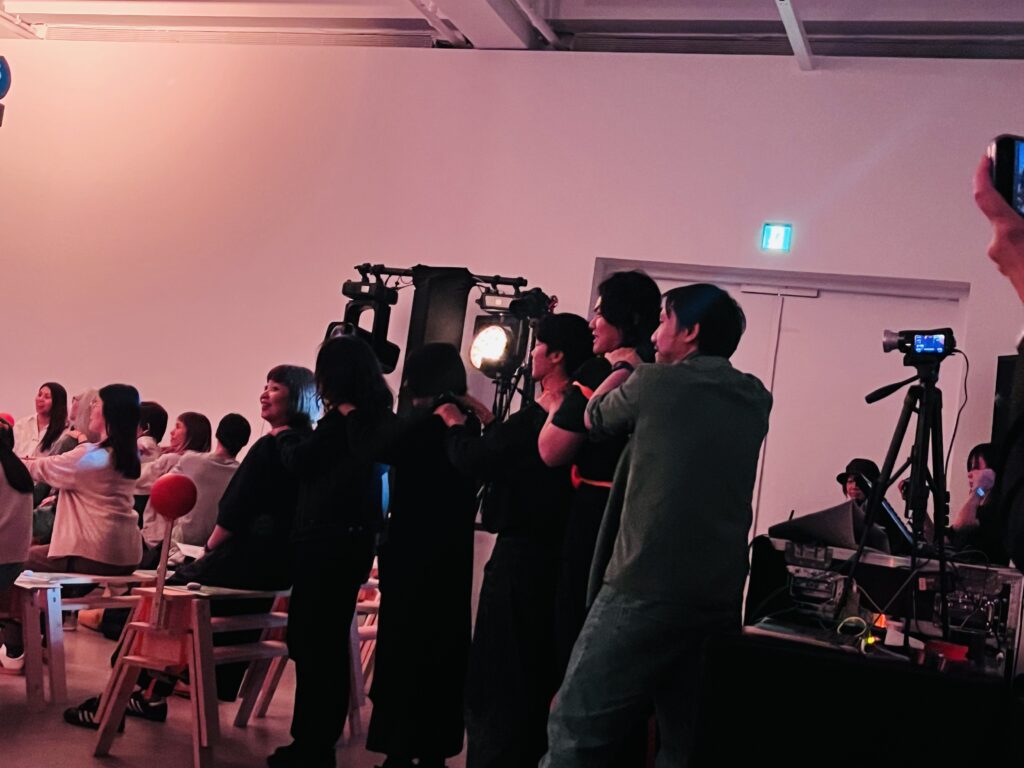
Since January 2025, I’ve joined Marlborough Productions’ Artist Advisory Group as a creative producer. Marlborough Productions is one of the UK’s leading National Portfolio Organisations working with queer artists and communities. In this capacity, I collaborate with two Co-Creative Directors, along with a network of queer artists, independent producers and facilitators, contributing strategic insight into their artistic policy.
From my perspective, holding space that embodies disability justice principles involves two main things: fundraising for work you believe in and ensuring that accessibility is embedded from the start. It also means making accessibility common practice by working with venues and partners who understand and value this. You can even encourage organisations to update their policies to fit the access riders and needs from a producer’s perspective. The essence of being a creative producer for queer-crip-led projects is the capacity to both understand funders’ priorities and champion queer-crip artists’ visions, acting as a necessary bridge between the two. For example, I embed accessibility from the moment a project is conceived — for artists involved, for the producing team, and for audience members — which is backed up by budgeting at the beginning of fundraising. But I also acknowledge that securing the additional access budget or partnering with accessible venues is not always possible. Working across different time zones with artists who have different working habits poses ongoing and unique challenges for a producer. However, the wider society would benefit greatly from seeing productions from marginalised communities, bringing different voices and possibilities of the future that are not only imagined by the privileged but also by the disadvantaged ones who envision a radical future that transcends borders. This is so important as a counter-argument to the current news reports in the UK.
performingborders: Burong, you have been a long term contributor to our platform. Back in 2019 you shared on performingborders your digital conversations “All the Tea in China by Burong (曾不容)” which explored connections with artists you had encountered on your residency in Belgrade the previous year. Cross-border, intersectional entanglements have been at the very centre of your practice and I wonder, as a creative producer with a rich background across curation, art, and research, how have you seen borders shape the UK performative scene in the past years? And looking forward, what are you working on now to continue contributing and shaping discourses within the live art ecology?
Burong Zeng: I first came to performingborders in 2018 to find a home for a bilingual column interview I worked on between 2016-19 on arts and technology. One pivotal piece was “The Transgression of Bodily Fluids Crossing Boundaries,” an interview with Zoran Todorovic, followed by “All the Tea in China,” a series of interviews on alternative live art education in Belgrade, where I did an MA in curation. What struck me then, and what continues to drive my producing practice now, is that everyone has their own boundaries to cross, and the boundaries for me specifically have always been changing. Geographically, over the last twelve years, my journey has taken me from China to the US to Europe and to the UK, and I’ve kept the faith to keep crossing them.
When I look at the UK performance scene specifically, the boundaries I’m trying to cross as a creative producer are the rigid role distributions that shape how institutions operate. There’s a division between curator and producer. Curators are seen as conceptual thinkers who frame artistic work, while producers are viewed as the practical facilitators who make things happen. There’s also a stark separation between academic and artist, where scholarly research is often divorced from the creative industry, even though they often ask similar questions through different methods. These aren’t just professional distinctions. They’re power structures that determine who speaks with authority on what, who gets funded for what kind of work, and whose knowledge is valued.
For me, I always try to maintain the triangle of artist-academic-producer and use knowledge from each side to feed into the other parts. This isn’t just about wearing multiple hats. It’s about fundamentally believing that these roles should be in constant conversation, that the divisions between them are artificial and at times counterproductive. When I’m producing Unbound Zine, my academic research on cross-cultural queer-crip practices informs how I envision the project. My producing skills enable me to translate artistic vision into fundable proposals and sustainable structures. None of these roles can be separated without diminishing the work.
What I’m working on now is creating structures where this triangle of three roles can be normalised rather than exceptional. I am currently seeking funding for a participatory project looking at the history of time-based media (including visual art, performance art, socially engaged practice and festivals) in the Sinophone culture and speculating our relationship with time beyond the clock.
Looking forward, I believe the UK performance scene needs to actively dismantle these role divisions. Maintaining the triangle means I’m not just a bridge but actively transgressing these boundaries, showing that the divisions themselves are the problem. I’m using my producing practice to question who gets to decide what roles we play in the performance scene and how we might transgress those constraints to create more inclusive, accessible, and genuinely transformative ways of working collectively.
Burong Zeng (she/her) is a creative producer, researcher, and live artist based in London and Beijing, working at the intersection of disability justice, queer cultures, and transnational collaboration. With a PhD in Theatre and Performance Studies from the University of Sussex, Zeng maintains a distinctive practice that bridges artistic creation, academic rigour, and independent producing — what she describes as the “triangle of artist-academic-producer.” Since 2023, Zeng has produced innovative projects funded by British Council, Arts Council England, Unlimited, and Artistic Directors of the Future, with a particular focus on accessibility and cross-cultural exchange. Recent work includes the bilingual project Unbound Zine: Xiaomei Going Overseas, which comprises a 30-minute artist film, four commissioned publications, and a mini-tour across England, exploring East and Southeast Asian queer zine-making culture. Another key project, Life Lies in (Non)Movement, developed in collaboration with Beijing-based performance artists, examines invisible disabilities through durational performance and improvisation, challenging ableist assumptions about productivity and mobility. As a native Mandarin and English speaker, Zeng specialises in producing and curating underground queer-crip projects that dismantle institutional boundaries and create accessible spaces for marginalised artists. @burongz
Featured image credits: Holli Xue